If you’re a tattoo artist looking for tips to create the perfect blackwork tattoo, whether you’ve been tattooing for a while and are looking to take your work to the next level or you’re a beginner looking to experiment with the increasingly popular style, you’ve come to the right place.
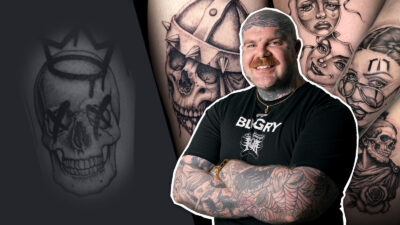
We spoke to two of our sponsored artists, Adrian Delargue and Joshua Beatson, for tips on blackwork techniques and healing advice as well as their go-to inks, cartridges, and machines!
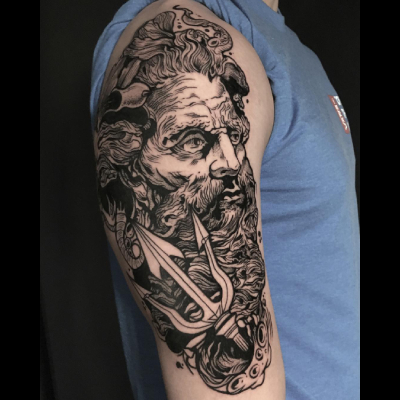
What Is A Blackwork Tattoo?
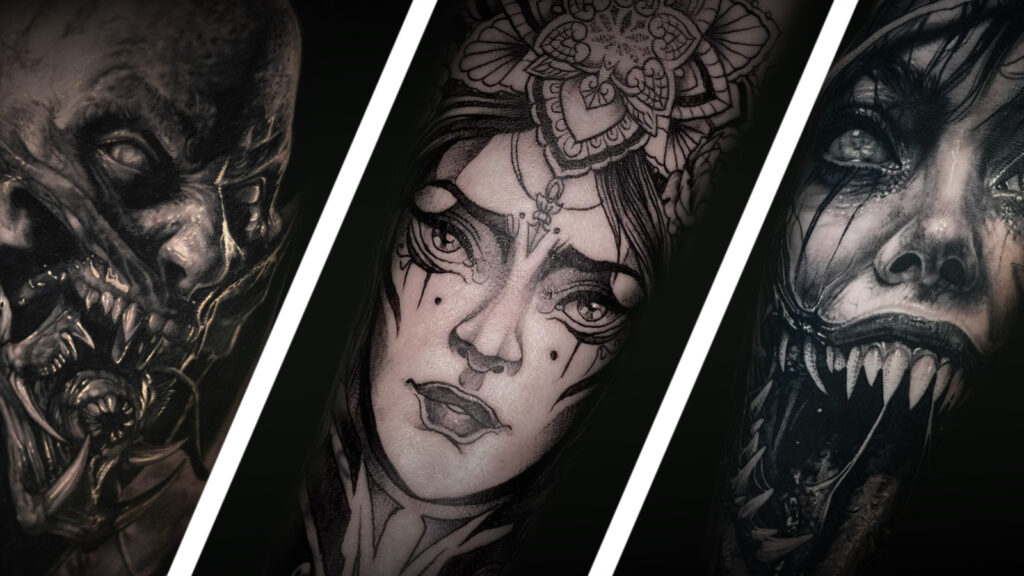
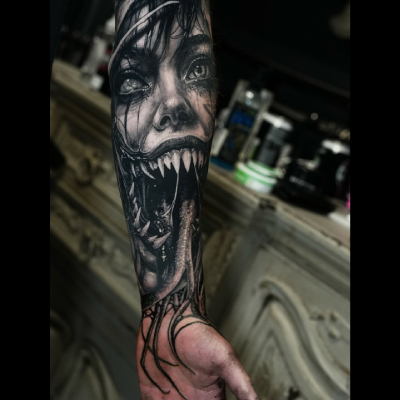
Blackwork tattoos are created using a style of tattooing that exclusively uses black ink to create thick outlines and bold solid black areas that are then contrasted with intentional negative space or ‘skin-breaks’ to add depth. Essentially, any design made only using black ink without the addition of colour or grey shading can be classified as a blackwork piece.
The origin of blackwork tattoos can be found in ancient tribal tattooing which has a particularly significant influence on the style we know today. Artists can create a range of designs using this style, including ‘blackout’ tattoos which are often used to cover up older tattoos, geometric, or illustrative and graphic designs.
Techniques For Creating A Blackwork Tattoo
There are a range of techniques that can be used to create a blackwork tattoo, including dotwork, whipshading, or stippling. Each method creates a distinct texture and depth. We asked our artists to share a bit about their own creative processes.
- Adrian Delargue
“Always look for high contrast. If you are using references you can play with the “curves’’ in Procreate to get that range of dark and light areas. Then just put your spin on it.”
- Joshua Beatson
“Techniques vary depending on the style of blackwork. Whether it be using large straight magnums for solid blackout, usually a 49 Magnum as they get large coverage and are consistent, or more stippled / textured work which I usually use a 3-5 Liner or even 3-9 Round Shaders.”
You can learn more from Joshua in this tutorial on how to tattoo blackwork horror!
Best Tattoo Inks for Blackwork
Each tattoo artist will have their own individual preference when it comes to black tattoo inks, and the choice often comes down to personal experience and how the ink heals.
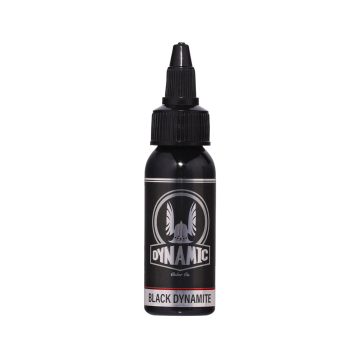
For Adrian Delargue, he prefers Dynamic and Fusion but stresses the importance of experimenting and documenting your results. He recommends always checking how inks heal and taking notes of everything you use and how you use it to avoid forgetting when you’re done with a tattoo. For Joshua Beatson, he uses Panthera Black because he has found it to be the darkest.
If you’re looking to explore other options, here are some other trusted brands you could consider:
Products
Choosing Cartridges and Machines for Blackwork Tattoos
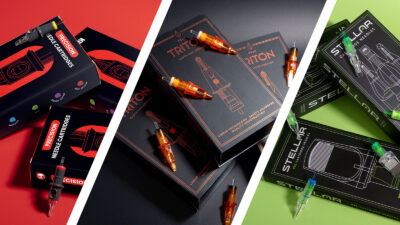
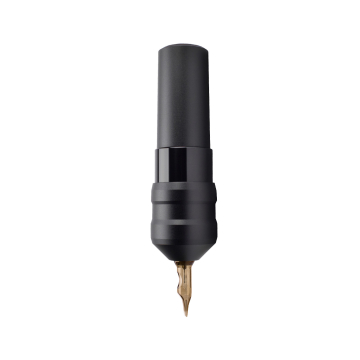
With so many cartridges and machines on the market, finding what suits your style and technique best is usually a process of trial and error. Our featured artists shared what setups work best for them.
- Joshua Beatson
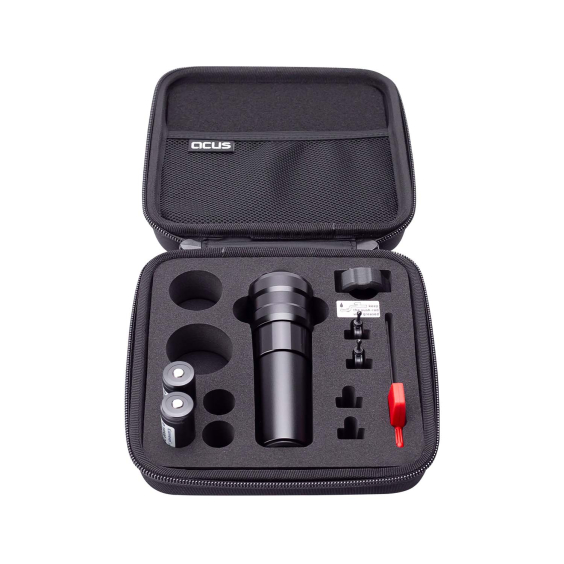
“For my textured blackwork I use the ACUS machine and Kwadron cartridges because they’re well suited to my way of working. For solid blackout, I find the Dan Kubin machines to work best for me with needle bars, nice and adjustable and super heavy hitting.”
- Adrian Delargue
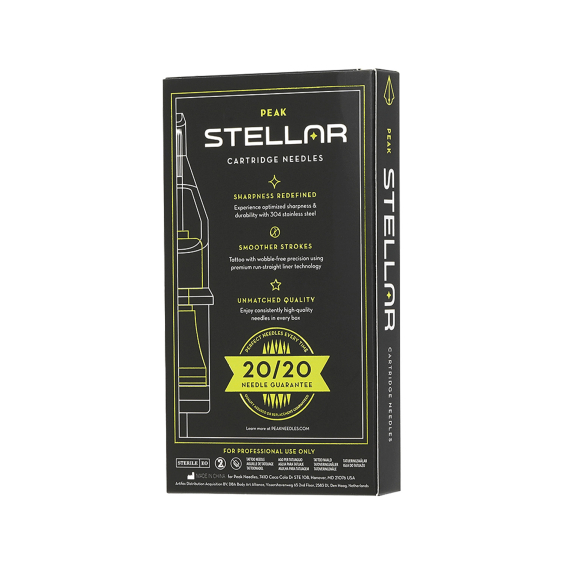
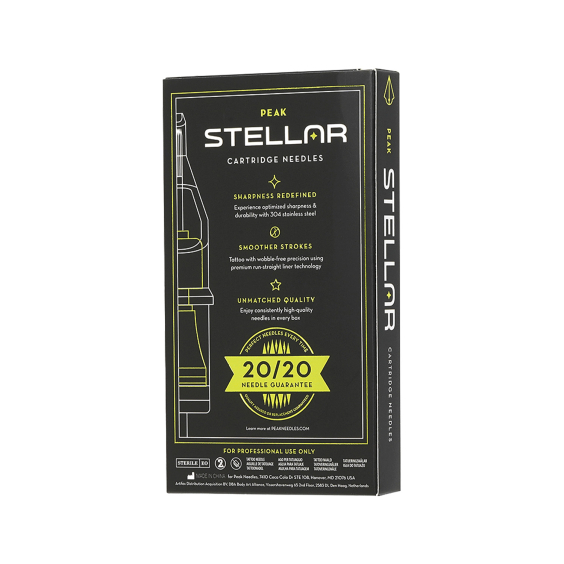
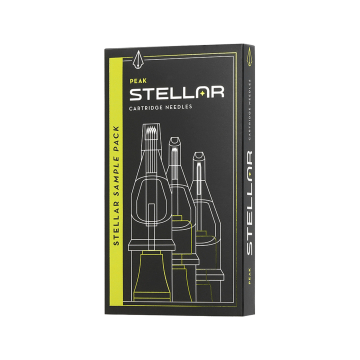
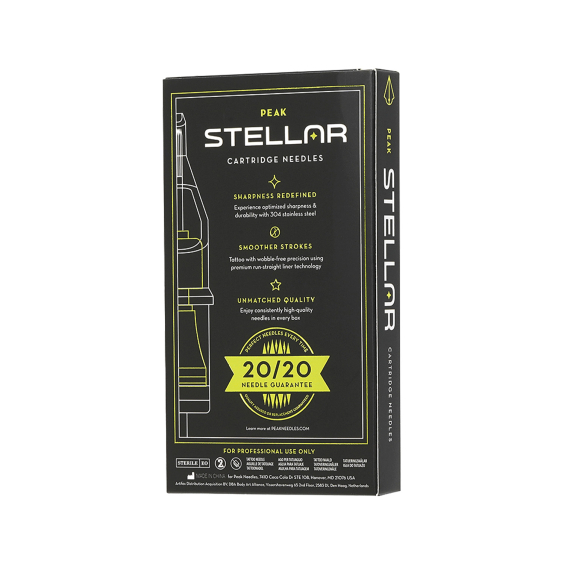
“My “go-to’’ are Round Liners (3RL and 5RL) for those fine details and stippling, Round Shaders (9RS) for thicker lines and to help fill small areas of solid black, and Soft Edge Magnums (7SEM,13SEM) for large solid black areas. And for brands, I use Magic Moon and Peak Stellar and Dan Kubin & Stigma Force machines.”
Products
How To Avoid Patchiness In Large Fills
When it comes to large-scale black fills, consistency is everything. Both Adrian and Joshua shared their go-to techniques to keep the pigment smooth and even.
Adrian recommends having a slow hand and moving in circles. He says cross patching works as well and now there are polarised glasses that really help too.
Whilst Joshua recommends working slowly to avoid patchiness and remain consistent.
What’s The Difference Between Liner Black vs Filler Black Inks?
When it comes to blackwork tattoos, two of the most common types you’ll hear artists talk about are liner black and filler black. While they might look similar in the bottle, they behave quite differently once they’re in the skin.
Liner black is typically thinner and less pigmented, designed to move smoothly through the needle and create crisp, controlled lines. Because it’s less dense, it’s also less likely to spread or “blow out” under the skin as it heals. Filler black, on the other hand, is heavier in pigment and thicker in consistency. It’s the go-to for filling large areas or packing in solid black. The higher pigment load helps it heal into a richer, more even finish — perfect for blackwork backgrounds or bold shading.
- “Filler black is more pigment heavy, whereas lining ink is generally thinner and less pigmented (so it doesn’t blow out or spread as easily).” - Joshua Beatson
- “Liner black doesn’t spread that much when healing, while filler gives you a much smoother finish.” - Adrian Delargue
You can learn more from Adrian and the supplies he uses in this tutorial on how to tattoo a blackwork Athena and her Owl!
Tips for Healing Blackwork Tattoos
Blackwork tattoos, especially large pieces, need a little extra care during healing to ensure the pigment settles properly and the skin stays healthy. Our featured artists shared their top aftercare advice:
- Don’t Over-Moisturise
Adrian recommends giving your skin some breathing room before applying any cream:
“Don’t over-moisturise. Normally I’ll wait until the second day after your tattoo to apply any cream.” - Adrian Delargue
- Try Dry Healing
Joshua finds that a dry healing method can work particularly well:
“For blackwork, I find dry healing with Tattoo Armour works the best.” - Joshua Beatson
As Adrian Delargue and Joshua Beatson shared, there’s no single formula for creating the perfect blackwork tattoo. It’s about understanding the supplies you use, studying how inks heal, and developing a rhythm and technique that works for you.
At the end of the day, blackwork is as much about artistic expression as it is about technical skill. With the right approach, your blacks will stay bold, your lines will hold, and your work will continue to stand out for years to come.